Modular formwork · pre-engineered steel panels
Metal formwork
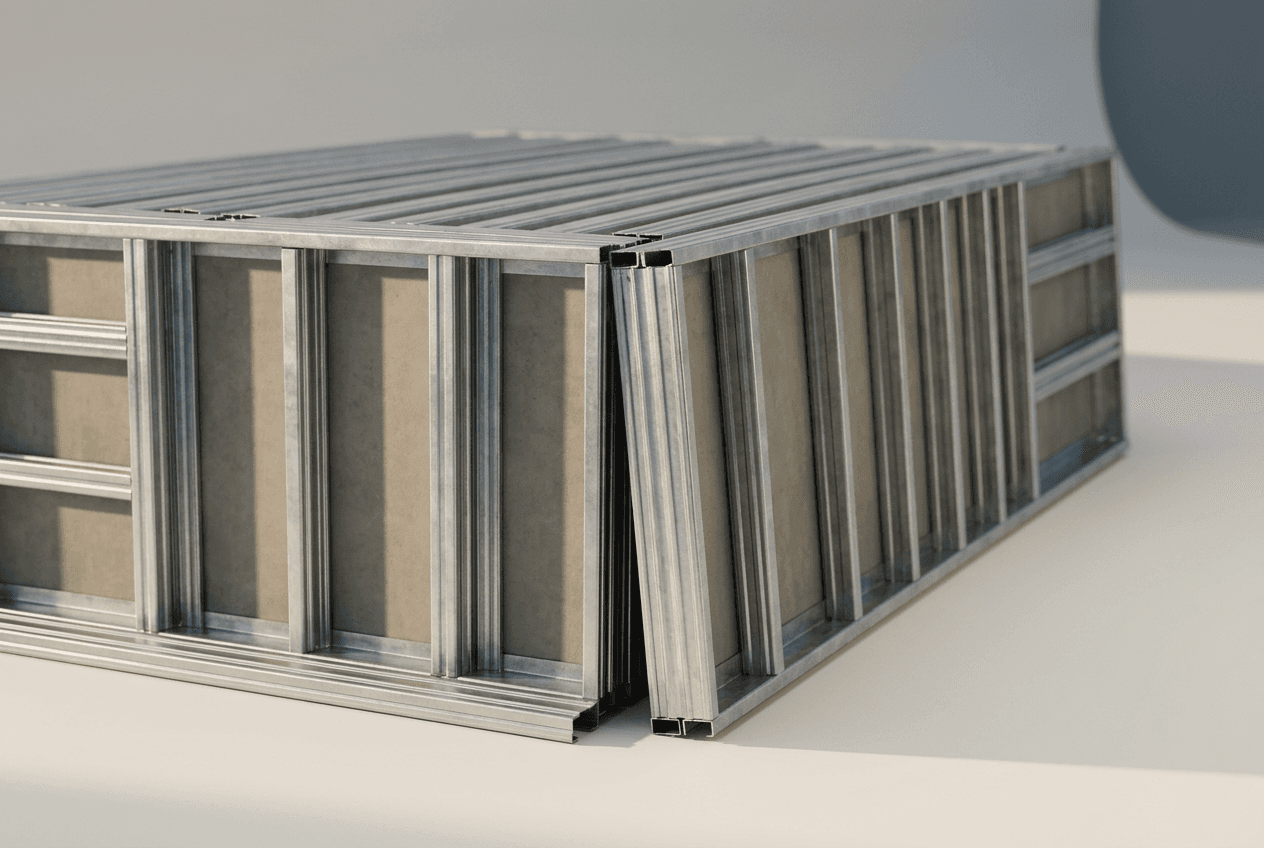
Metal formwork is a modular steel panel system for casting concrete walls, columns, and slabs at high volume. Riyadh Timber stocks panels **at 60×120, 90×180, and 120×240 cm with 6 mm galvanised frame and 4 mm steel face — delivering 200 to 300 reuse cycles** — for Vision 2030 towers, infrastructure, and high-rise residential work.
What is metal formwork?
Metal formwork is a pre-engineered modular system of steel panels used to cast concrete walls, columns, and slabs. Each panel has a 4 mm steel face plate welded to a 6 mm galvanised steel frame, joined to neighbouring panels by wedge clamps. Riyadh Timber stocks panels at 60×120, 90×180, and 120×240 cm certified to EN 13670.
Metal formwork delivers a smooth steel-cast concrete surface that requires minimal patching after stripping. Panels lock together with wedge clamps in seconds, accept tie-rods through pre-drilled holes, and break down for transport to the next pour location.
The system suits any project where the same form geometry repeats: tower cores, repetitive walls, modular columns, viaduct deck soffits. Each panel survives 200 to 300 form-pour cycles before the steel face requires re-truing or replacement.
Why is metal formwork used on Vision 2030 projects?
Metal formwork is used because it delivers 200 to 300 reuse cycles versus 5 to 8 for plywood, cuts pour-cycle time to 3 days from 5, and gives a smooth steel-cast surface needing no patching. On NEOM, Diriyah, and similar mega-projects, this means lower cost per square metre and faster floor-to-floor construction.
On a 40-storey tower with 1,200 m² of formed surface per floor, switching from plywood to metal formwork saves an estimated SAR 1.8 million in form material over the build, and shortens the superstructure programme by 2 to 3 months through faster pour cycles.
Vision 2030 mega-project schedules reward speed. Metal formwork strikes within 12 hours of pour completion at 75% strength, while plywood-and-timber forms require 24 to 48 hours of careful disassembly. The recovered time compounds across hundreds of pours.
What are the specifications of metal formwork?
Metal formwork ships in panels of 60×120, 90×180, and 120×240 cm with a 4 mm steel face on a 6 mm galvanised frame. Pour pressure tolerance is 60 to 80 kN/m², dimensional accuracy ±2 mm, panel weight 35 to 95 kg depending on size. Tie-rod holes at 30 cm grid, certified to EN 13670 and DIN 18202.
| Small panel | 60 × 120 cm — 35 kg |
|---|---|
| Medium panel | 90 × 180 cm — 65 kg |
| Large panel | 120 × 240 cm — 95 kg |
| Frame thickness | 6 mm galvanised steel |
| Face plate | 4 mm S275JR steel |
| Pour pressure tolerance | 60 to 80 kN/m² |
| Dimensional tolerance | ± 2 mm DIN 18202 |
| Tie-rod holes | 30 cm grid, 18 mm diameter |
| Reuse cycles | 200 to 300 form-pour cycles |
| Joint system | Wedge clamp, no bolts |
| Surface finish | Smooth steel cast (Class 1 visible concrete) |
| Standards | EN 13670 · DIN 18202 · SBC 304 |
Where is metal formwork used on construction projects?
Metal formwork is used on tower cores and shear walls, repetitive column casts, retaining walls, infrastructure deck soffits, and precast yard moulds. Any project with more than 30 repeats of the same form geometry justifies the modular steel system over plywood-and-timber alternatives.
- 01
Tower cores and shear walls
Modular panels assemble around lift cores and shear walls floor-by-floor, delivering smooth concrete and 3-day pour cycles on Vision 2030 high-rises.
- 02
Repetitive column casts
Pre-engineered column panels deliver consistent cross-section and surface finish across hundreds of identical columns — typical on commercial floor plates.
- 03
Retaining walls and basements
Single-sided forms for retaining walls and double-sided forms for basement walls, with tie-rod systems sized to soil and water pressure.
- 04
Infrastructure deck soffits
Viaduct, station, and tunnel decks formed in modular panels supported on shoring towers, delivering the smooth soffit visible on Riyadh Metro.
- 05
Precast yard moulds
Off-site casting yards use steel formwork for repetitive precast walls, beams, and panels — survives 500+ cycles with controlled-environment use.
How does metal formwork compare with film-faced plywood?
Metal formwork delivers 200 to 300 reuse cycles versus 30 to 50 for film-faced plywood, with capital cost 4 to 6 times higher. Metal cuts pour-cycle time to 3 days, gives a smoother cast surface, and suits towers and infrastructure. Film-faced plywood remains better for irregular shapes and projects below 30 form repeats.
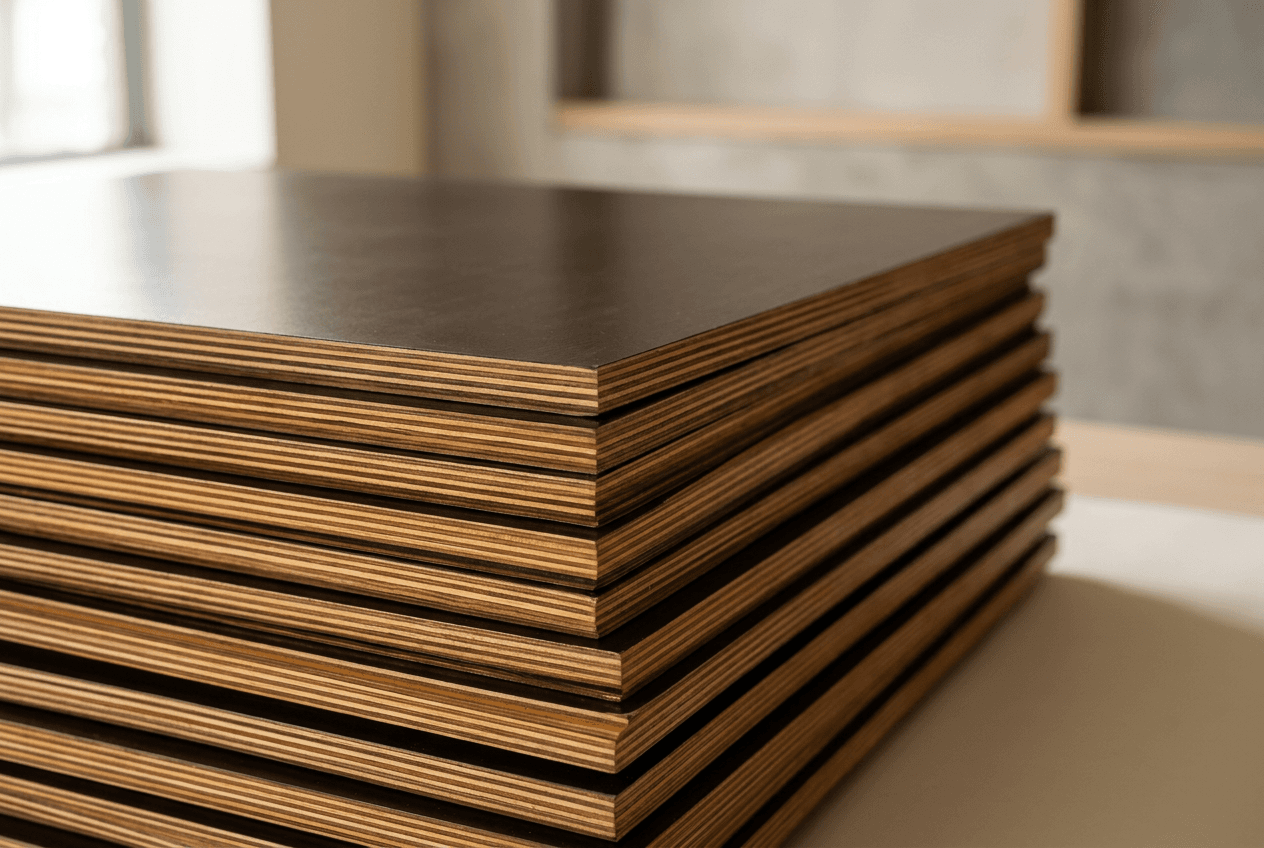
Film-faced plywood is the working choice for villa and low-rise residential work where form geometry varies pour-to-pour. Metal formwork is the answer for tower cores, repetitive columns, and infrastructure where the same shape repeats across hundreds of pours.
The breakeven on metal versus film-faced plywood is approximately 30 to 50 reuses on the same panel. Below that, plywood wins on capital cost; above it, metal wins on cost-per-cycle, programme speed, and surface quality.
| Attribute | Metal formwork | Film-faced plywood |
|---|---|---|
| Reuse cycles | 200 to 300 | 30 to 50 |
| Capital cost | High — SAR 380 to 1,850/panel | Moderate — SAR 110 to 180/sheet |
| Cost per cycle | SAR 6 to 10 / m² | SAR 12 to 20 / m² |
| Pour-cycle time | 3 days | 5 days |
| Surface finish | Smooth steel — Class 1 | Film face — Class 2 |
| Best fit | Towers, infrastructure | Villas, irregular shapes |
| Standards | EN 13670, DIN 18202 | WBP plywood, EN 636 |
How do I choose the right metal formwork system?
Match panel size to pour geometry: 60×120 cm for column casts and tight cores, 90×180 cm for general walls, 120×240 cm for large open walls and slab soffits. Verify pour-pressure rating against the calculated lateral pressure × 1.5 safety factor. Specify hot-dip galvanised frame for projects exceeding 100 reuse cycles.
Lateral concrete pressure depends on pour height, rate, and concrete temperature. Standard panels rated 60 kN/m² suit pours up to 5 m height at 1.5 m/hr rate. Higher pours or faster rates require panels rated 80 kN/m² or single-pour design with intermediate ties.
Rental versus purchase decision: rent for projects below 6 months duration, purchase for portfolios spanning multiple towers. Riyadh Timber rental contracts include delivery, return, and replacement of damaged panels; purchase contracts include 24-month defect warranty.
How is metal formwork installed on a Riyadh site?
Installation follows the panel layout drawing: panels assembled on the ground, lifted to position by crane, joined with wedge clamps at 60 cm centres, plumbed and aligned, then secured with tie-rods through pre-drilled holes. Strip after concrete reaches 75% strength, typically 12 to 24 hours from pour.
Apply form release oil to the steel face before each pour at 100 ml/m². The release coat prevents concrete bonding and extends face life past 200 cycles. Re-oil after each strip-down using the same coverage; never use diesel or used motor oil — both stain the cast.
Strip panels by releasing the wedge clamps and tie-rods in reverse assembly order. Crane the panels off the cast face — never pry with crowbars, which dent the steel face. Stack stripped panels horizontally on timber bearers and clean residual concrete with a wire brush.
Does metal formwork meet Saudi Building Code requirements?
Riyadh Timber's metal formwork meets EN 13670 execution-of-concrete-structures, DIN 18202 dimensional tolerances, and SBC 304 reinforced-concrete provisions. Each panel carries a CE mark, mill certificate of steel grade, and load test reports. Vision 2030 mega-projects require third-party witnessed testing on representative panels.
Panel certificates list face-plate steel grade (S275JR or higher), frame galvanising thickness (≥ 60 microns to EN ISO 1461), pour-pressure test result, and dimensional accuracy at receipt. The site QC team logs the panel batch and inspection date on the formwork erection record.
Which Saudi projects use metal formwork from Riyadh Timber?
Metal formwork from Riyadh Timber serves NEOM, Red Sea, Diriyah, Qiddiya, and New Murabba, the King Abdullah Financial District towers, Riyadh Metro stations and viaducts, and high-rise residential towers across Olaya. Rental contracts cover 200-panel site mobilisations up to 5,000-panel tower portfolios.
- Vision 2030 mega-projects: NEOM, Red Sea, Diriyah, Qiddiya, New Murabba — tower cores, shear walls, infrastructure decks.
- King Abdullah Financial District and Olaya towers — modular wall and column panels through superstructure.
- Riyadh Metro stations and elevated viaducts — soffit and pier-shaft formwork.
- High-rise residential in Hittin, Al Malqa, Al Yasmin — repetitive wall and core panels.
What are common questions about metal formwork?
**SAR 50,000** is the effective rental or sale minimum, equivalent to approximately 100 m² of formed surface in mid-size panels. Smaller orders are bundled with existing project shipments to absorb logistics cost.
We rent metal formwork on **monthly contracts**, with rates from SAR 25 to SAR 75 per panel per month depending on size and contract length. Sale prices range SAR 380 to 1,850 per panel. Rental contracts include delivery, return, and replacement of damaged panels.
Standard panels carry **60 kN/m² lateral pressure**, sufficient for pours up to 5 m height at 1.5 m/hr rate. Heavy-duty panels rated 80 kN/m² are available for tall single-pour walls and rapid-pour applications, on 3 to 5 week order from Turkey.
Yes. Our metal formwork ships with **EN 13670 mill certificates, CE marks, and witnessed load test reports** on request. These satisfy Aramco SAES-Q-001 and SABIC engineering-standard reviews on industrial and petrochemical projects.
Galvanised panels survive **200 to 300 form-pour cycles** with proper release oil, careful stripping, and routine cleaning. Painted panels are 100 to 150 cycles. Damaged face plates can be re-trued and re-coated to extend service life.
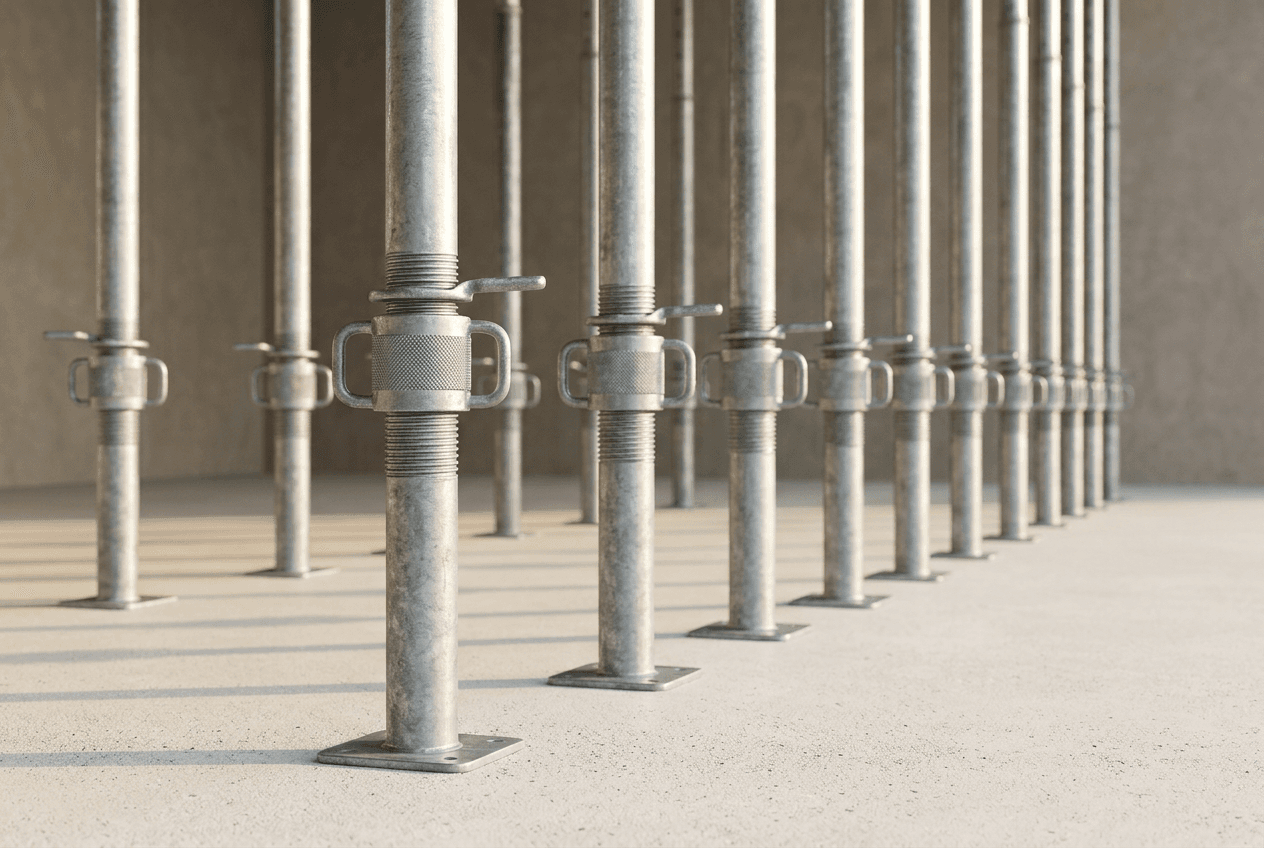
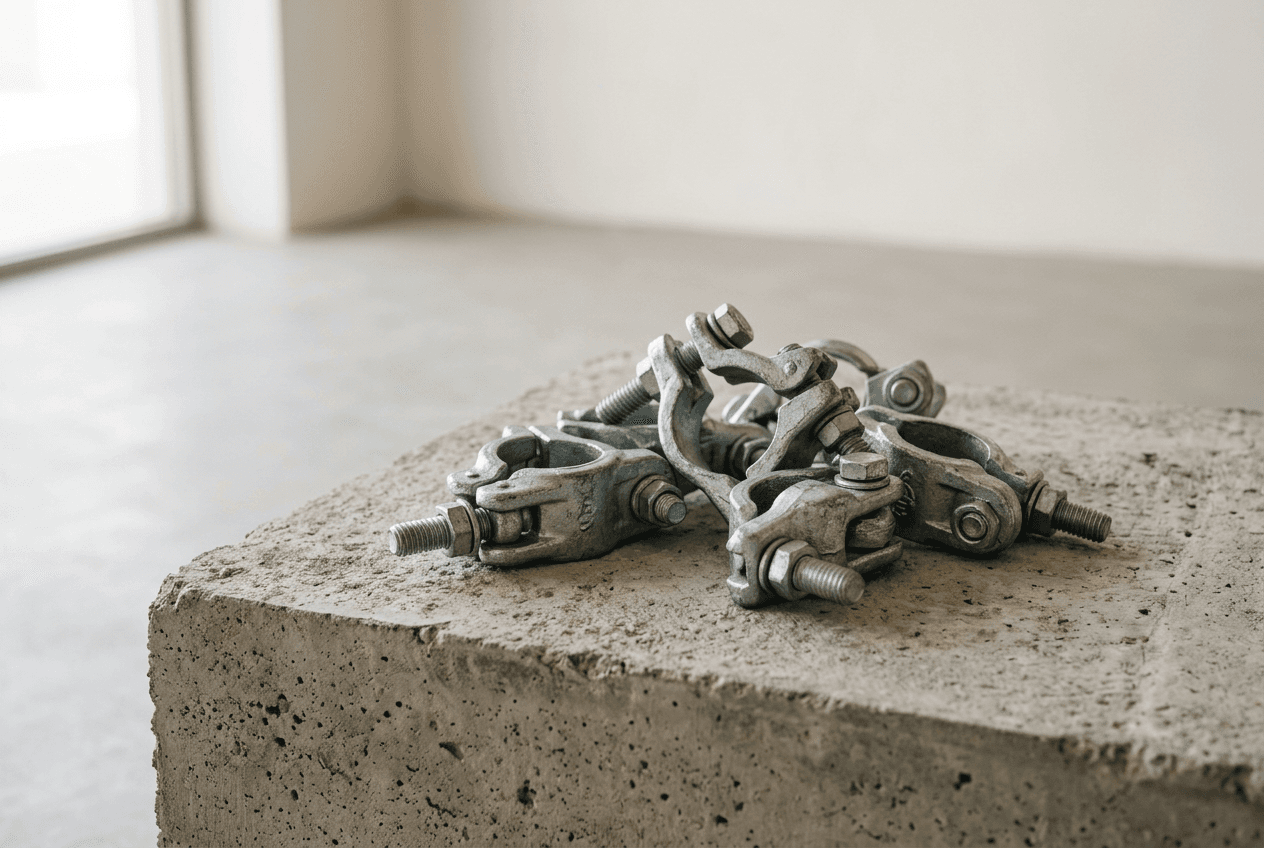
Yes. **Modular shoring towers, tie-rods, wedge clamps, and timber soldiers** are supplied as a complete formwork system. Tie-rods come at 0.6, 0.9, and 1.2 m lengths in 18 mm diameter, with cones, nuts, and water-stops as accessories.
Standard panels mobilise within **3 to 5 working days** from contract signing for stock items in our Olaya yard. Custom panel sizes or special heights require 3 to 5 week order from the Turkish or German manufacturers.
What products relate to Metal formwork?
Selections that complement the work in Saudi construction projects.
Need a quote on metal formwork for your project?
Send your formwork drawing or wall and column schedule with project duration. We respond with a formal rental and sale quote within 4 working hours — panel quantities, total, lead time, and EN 13670 certificates included.