Construction timber · fire-retardant treated panel
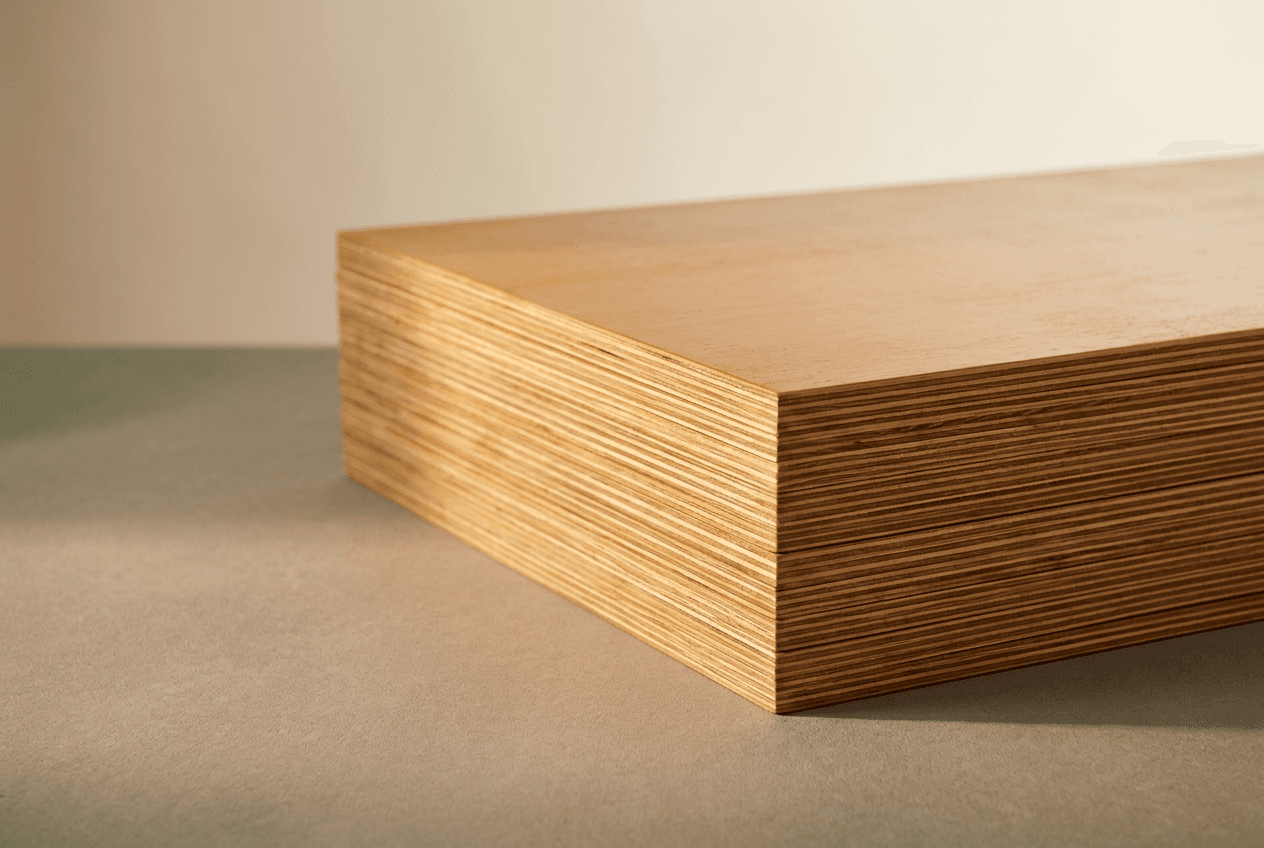
Fire-retardant plywood
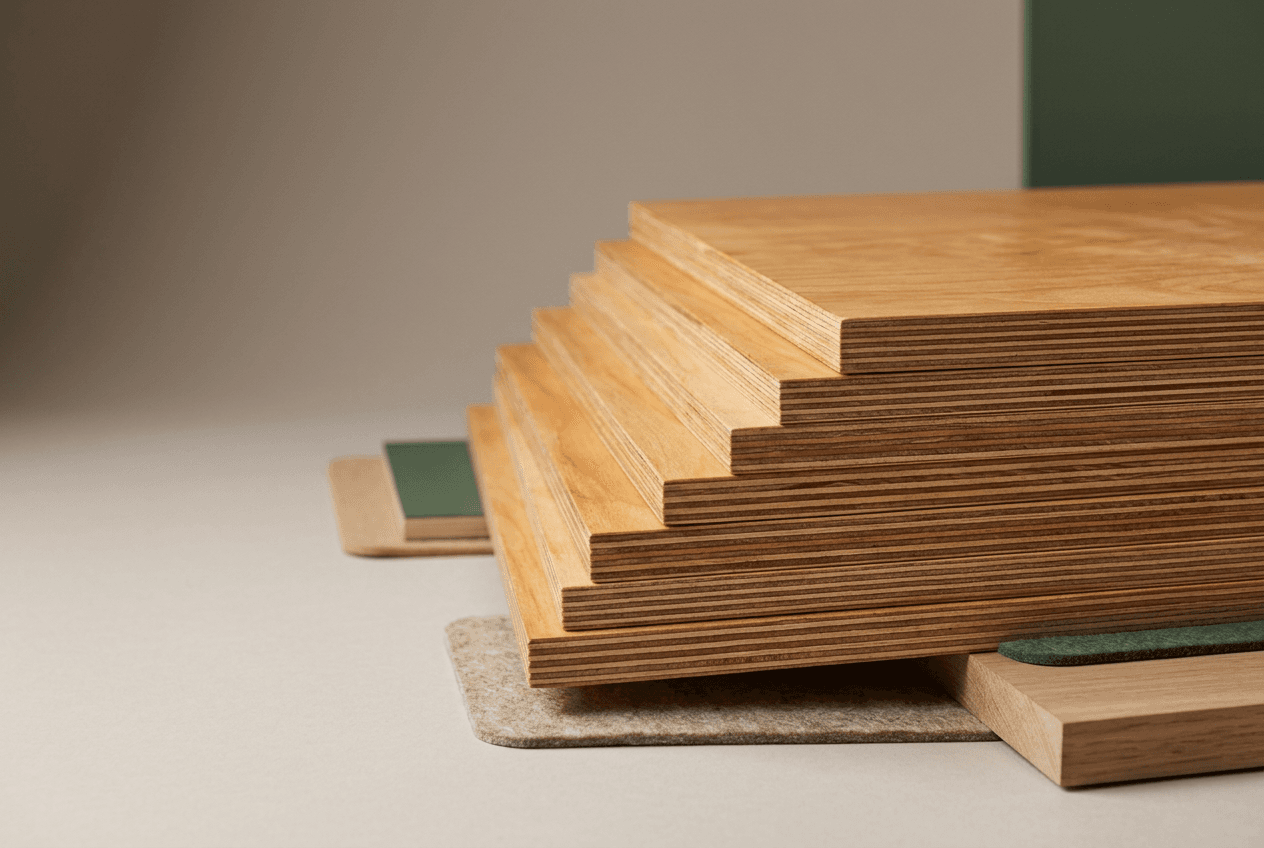
Fire-retardant plywood is plywood pressure-treated with phosphate-borate chemistry that slows flame spread and reduces smoke generation. Certified to **ASTM E84 Class A (FSI ≤ 25, SDI ≤ 450)**, IS 5509, and BS 476 Part 7 — used in exits, stairs, theatres, and laboratories under SBC 801.
What is fire-retardant plywood?
Fire-retardant plywood is plywood pressure-impregnated with phosphate-borate chemistry that penetrates the veneer plies, slowing flame spread and reducing smoke generation when exposed to fire. It achieves Class A under ASTM E84 — the highest classification permitted for wood used in exits, stair enclosures, and assembly areas.
Treatment occurs in autoclave vessels at 70–90 °C and elevated pressure, driving the chemical 2–3 mm into the panel core. The process leaves the wood's appearance largely unchanged but imparts a permanent fire-retardant property for the working life of the sheet.
Fire-retardant plywood is not fireproof — it is fire-retardant. It resists ignition long enough for occupant evacuation. Under sustained direct flame, the panel will eventually char and burn, but at roughly 70% slower rate than untreated plywood of the same thickness.
Why is fire-retardant plywood used in construction?
Fire-retardant plywood satisfies SBC 801 in spaces required to maintain structural integrity during a fire event — emergency exits, stairs, internal corridors, theatres, laboratories, and hospitals. It prevents rapid flame spread and provides evacuation time, and is a documented requirement for Saudi Civil Defense permitting.
In buildings above 3 storeys or with occupant capacity exceeding 300, Civil Defense mandates Class A fire-rated materials on all exposed interior surfaces. Untreated plywood with a Class C rating is not acceptable in these contexts — even with surface fire-retardant paint applied.
The practical difference: untreated plywood ignites within 30 seconds of direct flame and produces dense smoke. Treated plywood resists ignition for 2–4 minutes and produces roughly one-third the smoke volume, materially reducing the asphyxiation risk along an evacuation route.
What are the specifications of fire-retardant plywood?
Fire-retardant plywood ships in 122×244 cm sheets at thicknesses 6, 9, 12, 15, 18, and 25 mm, autoclave-treated with phosphate-borate chemistry. ASTM E84 Class A rating: FSI ≤ 25 and SDI ≤ 450. Fire rating ranges 30 to 90 minutes by thickness. Each batch ships with ASTM, IS, and BS test reports.
| Product name | Class A fire-retardant plywood |
|---|---|
| Country of origin | Malaysia · India |
| Base species | Tropical hardwood, cross-laminated |
| Treatment | Phosphate-borate, autoclave pressure |
| Thicknesses (mm) | 6 · 9 · 12 · 15 · 18 · 25 |
| Sheet size (cm) | 122 × 244 |
| ASTM E84 — FSI | ≤ 25 (Class A) |
| ASTM E84 — SDI | ≤ 450 |
| BS 476 Part 7 | Class 1 |
| IS 5509 | Compliant |
| Fire rating range | 30 – 90 minutes (thickness-dependent) |
| Certifications | ASTM · IS · BS · SBC 801 |
What are the construction applications of fire-retardant plywood?
Fire-retardant plywood serves five contexts driven by safety codes: fire-exit corridor cladding, stair enclosures and fire doors, theatre and assembly-hall finishes, healthcare and education interiors, and laboratory or industrial walls handling combustible materials. The most-specified thicknesses are 12 and 18 mm.
- 01
Exit corridor cladding (12–18 mm)
Treated panels bond to walls along corridors leading to fire exits, providing the rated flame-spread resistance required for evacuation routes under SBC 801.
- 02
Stair enclosures and fire doors (18–25 mm)
In high-rise buildings, the timber stair structure and fire-rated doors are clad in Class A panels to meet the 60-minute fire resistance requirement.
- 03
Theatre and assembly finishes (12 mm)
Cinemas, theatres, conference halls — high-occupancy spaces where surface materials must be slow to ignite to allow safe egress under fire conditions.
- 04
Healthcare and education interiors (9–12 mm)
Door panels, internal walls, suspended ceilings in hospitals and schools where the highest tier of public-safety performance is required.
- 05
Laboratories and industry (15–25 mm)
Spaces storing or working with flammable chemicals, where building-code fire performance is enforced on internal partitions and ceiling assemblies.
Fire-retardant plywood vs untreated plywood with fire-retardant paint?
Pressure-treated plywood carries fire resistance throughout its core — permanent for the life of the sheet. Surface paint on untreated plywood is a coating layer that wears in 2–4 years and requires reapplication. Under flame, paint adds 30 seconds; pressure-impregnated chemistry adds 2–4 minutes and qualifies under Class A.
SBC 801 does not accept fire-retardant paint as a Class A solution for stairs and exits because the operational life of the coating is not guaranteed. Pressure treatment is verified by ASTM E84 testing on a sample of the actual sheet, which is the documentation Saudi Civil Defense requires.
| Attribute | Fire-retardant | Untreated |
|---|---|---|
| ASTM E84 class | Class A (FSI ≤ 25) | Class C (FSI ≥ 76) |
| Resistance to ignition | 2 – 4 minutes | 30 seconds |
| Smoke index (SDI) | ≤ 450 | ≥ 1,200 |
| Treatment type | Pressure-impregnated | None |
| Operational life of fire performance | Permanent | Not applicable |
| SBC 801 acceptance | Approved for exits and stairs | Not approved |
| Indicative price | + 2.5 – 3× untreated | Baseline |
How do I choose the right fire-retardant plywood thickness?
Thickness is selected against fire rating: 9 mm for 30 minutes, 12 mm for 45 minutes, 18 mm for 60 minutes, 25 mm for 90 minutes. The consulting engineer assigns the rating per zone. Doors that compartment the building typically require 25 mm to meet the 90-minute requirement.
Residential buildings under 3 storeys typically only require 30-minute resistance. Hospitals and schools require a 45-minute baseline. High-rise office and retail typically requires 60 minutes in corridors and 90 minutes at fire doors that compartment the building.
How is fire-retardant plywood stored and installed?
Fire-retardant plywood stores in a dry environment — the chemistry is water-soluble over long exposure. Installation uses hot-dipped galvanised screws at 20 cm maximum spacing into the framing, with fire-retardant adhesive on the substrate. Avoid surface cuts deeper than 2 mm to preserve the impregnated layer.
If deeper cuts are unavoidable — splitting a sheet into two pieces — paint the cut edges with a Cut Edge Sealer rated for fire-retardant work to restore the Class A surface classification. Fasteners must penetrate the framing by at least 2.5× the panel thickness to ensure they hold under thermal expansion during a fire event.
Does fire-retardant plywood meet Saudi Building Code requirements?
Our panels meet SBC 801 fire-safety provisions and ship with a current ASTM E84 test report at Class A (FSI ≤ 25), plus IS 5509 (India) and BS 476 Part 7 Class 1 (UK) certifications. Each batch carries a test report from an accredited laboratory, ready for Saudi Civil Defense review.
For government projects, Civil Defense can require a third-party batch-specific test report on the actual delivered consignment. We arrange this at an additional 7–10 days lead time and SAR 2,500 per test, with the report issued in the project's name for direct submission.
Which Saudi projects use fire-retardant plywood?
Fire-retardant plywood is specified in public and private hospitals, schools and universities, financial-district towers in Riyadh, branded hotels, theatres and museums at Diriyah and Qiddiya under Vision 2030, and laboratory buildings at KACST and major Saudi universities.
- Hospitals and medical centres — corridor wall cladding and patient-room doors.
- Schools and universities — interior finishes and assembly-hall doors.
- Riyadh financial district and shopping malls — stair-enclosure cladding and exit corridors.
- Diriyah and Qiddiya museums and theatres — interior finishes to Class A.
- Laboratories and chemical industry — partition walls rated to 60 minutes.
What are common questions about fire-retardant plywood?
Pressure-impregnated treatment is **permanent for the life of the sheet** in dry interior conditions. Repeated direct water exposure can leach the chemistry over time, which is why the product is specified for interior use only and not for external facade applications.
Pricing runs **2.5 to 3× untreated plywood** at the same thickness, reflecting chemical cost and autoclave processing time. The premium offsets indirect cost — Civil Defense fees, post-inspection retrofits, and exposure to non-compliance penalties on occupied buildings.
Both **water-based and oil-based paints** apply after light sanding. For best practice, use Class A rated paint to avoid layering a faster-igniting coating over the treated substrate. Surface paints do not invalidate the panel's classification when applied as tested.
Class A is **FSI 0–25**, the most stringent. Class B is FSI 26–75. Class C is FSI 76–200. SBC 801 mandates Class A for exits and stairs, Class B is acceptable for general interior surfaces, and Class C is not permitted in public-occupancy buildings.
Yes, on special order with a **500-sheet minimum and 4–6 weeks lead time**. This is useful for large projects requiring visual consistency between treated and untreated plywood — same wood appearance, same supplier, with the fire performance applied where SBC 801 requires it.
The phosphate-borate chemistry is **EPA-approved** and does not off-gas after curing. Formaldehyde emissions are E1-rated (≤ 0.124 mg/m³), making the panel acceptable for hospitals, schools, and other indoor environments with public-safety scrutiny.
Long-term rain exposure leaches the treatment chemistry. For exterior fire-rated applications we recommend **fibre-reinforced cement boards, calcium silicate sheets, or sealed phenolic-faced plywood** specifically rated for outdoor performance in the Riyadh climate.
What products relate to Fire-retardant plywood?
Selections that complement the work in Saudi construction projects.
Need a quote on fire-retardant plywood for your project?
Send your quantity list with thicknesses and installation zones. We respond with a formal quote within 4 working hours — including ASTM E84 and IS 5509 reports approved by Saudi Civil Defense.