Construction timber · premium tropical plywood
Malaysian plywood
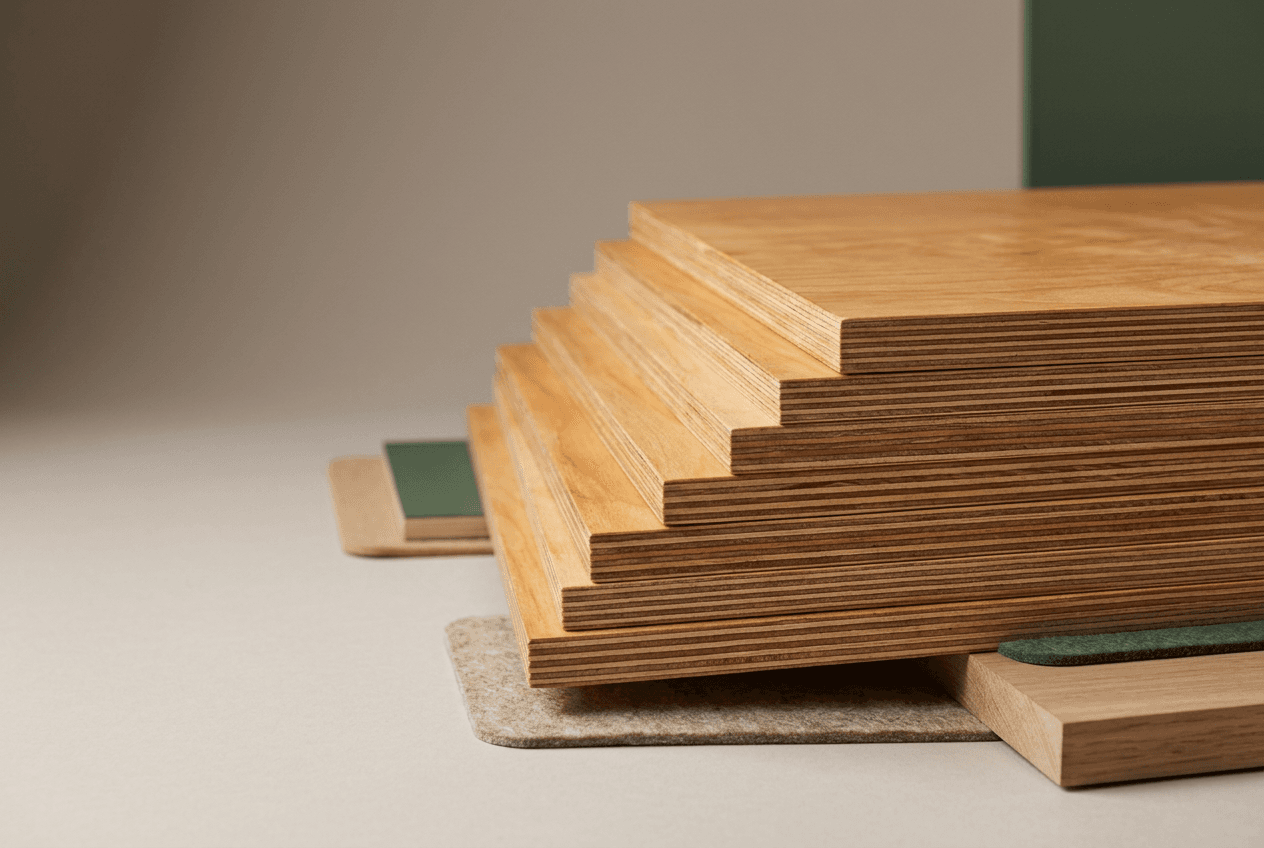
Malaysian plywood is an engineered panel built from Sarawak and Sabah meranti and keruing, phenolic-bonded WBP, with high density. Stocked in Riyadh **at thicknesses of 4, 6, 9, 12, 15, 18, and 25 mm in 122×244 cm sheets**, certified to MS 2515, JAS, PEFC, and FSC for sustainable supply chains.
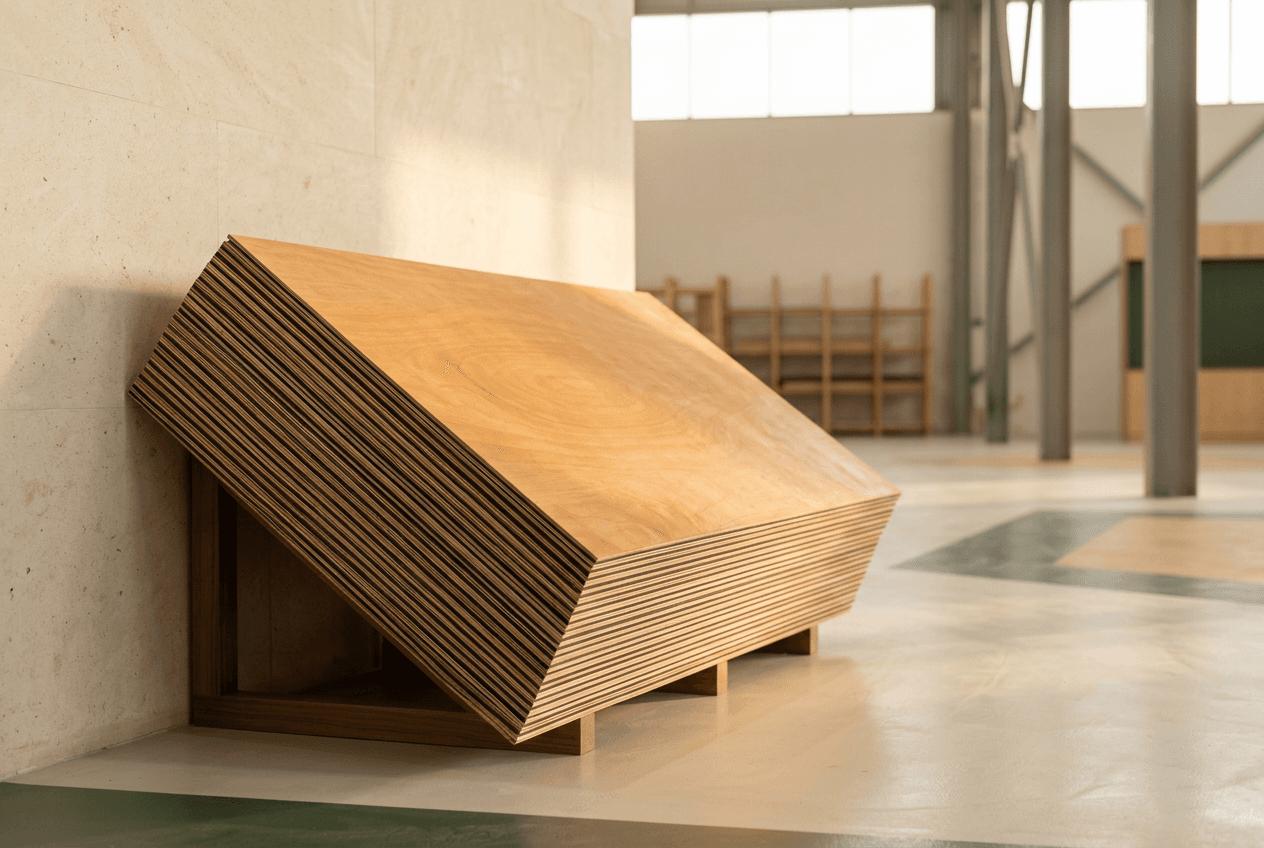
What is Malaysian plywood?
Malaysian plywood is an engineered panel built from cross-laminated meranti, keruing, and tropical hardwood veneers sourced from Sarawak and Sabah forests, phenolic-bonded to WBP grade. Manufactured to MS 2515 with JAS Japanese certification, it ships to Saudi Arabia at thicknesses 4 to 25 mm.
The defining advantage of Malaysian plywood is **source consistency**: Sarawak and Sabah are the two largest commercial tropical-hardwood production regions, with strict government oversight of harvest concessions. This guarantees continuous supply at consistent density and appearance across batches — a critical attribute for long-running projects.
Higher density of 600–650 kg/m³ — about 5% above Indonesian — gives Malaysian plywood superior screw and hinge holding without splitting, plus tighter dimensional stability under heat. These properties make it the preferred panel for hospitality and premium finish work.
Why is Malaysian plywood used in construction?
Malaysian plywood combines batch-to-batch consistency with available PEFC and FSC sustainability certificates, both increasingly required on Vision 2030 and international hotel projects. The high 600–650 kg/m³ density also delivers up to 7 form-pour cycles in structural formwork.
On projects bound by sustainable supply-chain requirements (LEED, Mostadam Saudi), PEFC-certified Malaysian plywood is one of the few commercially available structural options. Alternative supply from European or American certified forests is more expensive and slower to source.
Vision 2030 hotel and resort finishes (Red Sea, Diriyah, NEOM) require visual uniformity across vast surface areas. Malaysian plywood delivers that consistency because our certified mills source from registered concession blocks with controlled species mix.
What are the specifications of Malaysian plywood?
Malaysian plywood ships at 122×244 cm in thicknesses 4, 6, 9, 12, 15, 18, and 25 mm, density 600–650 kg/m³, phenolic WBP bond. The 18 mm sheet sustains up to 48 kN/m² pour pressure and survives 7 form-pour cycles. Certifications: MS 2515, JAS, PEFC, and FSC.
| Product name | Malaysian WBP plywood |
|---|---|
| Country of origin | Malaysia — Sarawak and Sabah |
| Wood species | Meranti / keruing / tropical hardwood |
| Layer count | 3 – 13 plies |
| Thicknesses (mm) | 4 · 6 · 9 · 12 · 15 · 18 · 25 |
| Sheet size (cm) | 122 × 244 (standard) |
| Density (kg/m³) | 600 – 650 |
| Bond type | Phenol formaldehyde (WBP) |
| Pressure tolerance | Up to 48 kN/m² at 18 mm |
| Form-pour reusability | Up to 7 cycles |
| Certifications | MS 2515 · JAS · PEFC · FSC |
| Emissions | E1 — ≤ 0.124 mg/m³ |
What are the construction applications of Malaysian plywood?
Malaysian plywood serves five primary contexts: tower formwork (18 mm), hospitality and office finishes (12–15 mm), premium joinery (12–18 mm), permanent suspended ceilings (4–6 mm), and PEFC-rated egress cladding (18–25 mm) for projects with sustainable supply requirements.
- 01
Tower formwork (18 mm)
On office towers and hotels with tall column lifts, Malaysian plywood withstands 48 kN/m² and supports 7 pour cycles — about 15% above Indonesian.
- 02
Hospitality and office finishes (12–15 mm)
Interior wall cladding in Diriyah and Red Sea hotels. High density delivers a solid acoustic response and consistent face appearance for premium fit-outs.
- 03
Premium joinery and executive offices (12–18 mm)
Substrate for walnut, teak, and oak veneer on conference tables and built-in cabinetry. Holds heavy hinges and screws without splitting.
- 04
Permanent suspended ceilings (4–6 mm)
In permanent commercial and corporate buildings, the higher density resists sag under the weight of recessed lighting and HVAC ducts.
- 05
PEFC-rated egress cladding (18–25 mm)
For projects requiring chain-of-custody certification, Malaysian PEFC plywood is one of the few structural-grade options available in commercial volumes.
What is the difference between Malaysian and Indonesian plywood?
Malaysian plywood at 600–650 kg/m³ is slightly denser than Indonesian (580–620 kg/m³) and uniquely available with PEFC and FSC certificates in commercial volumes. Pricing runs 15–20% higher; reuse cycles 7 vs 8. The choice tracks sustainability requirements, not mechanical performance.
Indonesian plywood remains the practical choice for ordinary structural formwork due to the price gap. Malaysian is the specific choice for projects requiring documented sustainability, or hotel finishes that demand visual uniformity across production batches.
| Attribute | Malaysian | Indonesian |
|---|---|---|
| Base species | Meranti / keruing (Sarawak, Sabah) | Meranti / keruing (Java, Kalimantan) |
| Density | 600–650 kg/m³ | 580–620 kg/m³ |
| Bond resin | WBP — phenolic | WBP — phenolic |
| Form-pour reuse | 7 cycles | 5–8 cycles |
| Sustainability certs | PEFC · FSC · MS 2515 · JAS | ISO 9001 · ISO 14001 |
| Indicative price/sheet | SAR 55–180 | SAR 45–120 |
| Recommended use | Hotels, PEFC projects, premium finishes | Standard formwork, joinery, general cladding |
When should I choose Malaysian plywood over Indonesian?
Specify Malaysian plywood in three cases: projects requiring PEFC or FSC chain-of-custody, premium finishes demanding visual uniformity, and joinery with heavy hinge loads. For ordinary residential formwork, Indonesian delivers equivalent performance at lower cost.
On international hotel and Vision 2030 mega-projects with environmental documentation requirements, PEFC-certified Malaysian plywood is the primary choice. The 15–20% price premium is justified by chain-of-custody compliance.
For executive offices and luxury villas finished with natural veneer over plywood, Malaysian's higher density delivers a flatter, stiffer substrate that supports the veneer more reliably. This reduces blistering and crack risk over the long term.
How is Malaysian plywood stored and installed?
Malaysian plywood stores flat on bearers 10–15 cm off the ground, in a dry shaded area. Installation uses screws at 20–30 cm spacing with a 2 mm expansion gap between sheets. The high density requires power tools for cutouts — manual cutting is slow and risks splintering.
For formwork, brush release oil at 250 ml/m² before first use. After each cycle, scrape with a plastic scraper and store under a breathable cover. The higher density slows water absorption, extending working life.
For finish applications, the high density requires pilot-drilling for screws on thin sections to prevent edge splitting. Cutting with a TCT 40-tooth circular saw blade gives a clean splinter-free edge.
Does Malaysian plywood meet Saudi Building Code requirements?
Malaysian plywood meets SBC 201 structural requirements, with each shipment carrying MS 2515 mill certificates, JAS Japanese certification, and PEFC or FSC chain-of-custody. This makes it one of the few plywood options on the Saudi market with documented sustainability — sufficient for Mostadam Saudi and LEED credit.
On Vision 2030 projects targeting Mostadam Gold or Platinum, the PEFC certificate on Malaysian plywood contributes to Materials and Resources credits. This credit is unavailable with non-certified plywood, even if mechanical performance is identical.
Which Saudi projects use Malaysian plywood?
Malaysian plywood ships into Diriyah and Red Sea hotels and resorts, King Abdullah Financial District towers, premium villas in Hittin and Al Malqa, NEOM executive offices, and international hotel projects requiring Mostadam Gold/Platinum or LEED Gold certification. Also used in conference-hall finishes.
- Vision 2030 hotels and resorts: Diriyah, Red Sea, NEOM — interior finishes and built-in joinery.
- King Abdullah Financial District — executive office and conference room cladding.
- Premium villas in Hittin, Al Malqa, Al Yasmin — built-in joinery and natural-veneer interior doors.
- Major conference and exhibition halls — wall cladding and permanent suspended ceilings.
- Mostadam-certified government buildings — egress cladding, corridors, and administrative doors.
What are common questions about Malaysian plywood?
The 15–20% premium is justified only on **projects requiring PEFC/FSC certification or batch-to-batch visual uniformity**. For ordinary residential formwork, Indonesian delivers comparable performance at lower cost. The choice is governed by project requirements, not mechanical performance gaps.
**150 sheets** is the effective minimum for delivery. Smaller quantities ship from our Olaya yard. For large projects, full container shipments from Port Klang at 2,500 sheets and 4–6 weeks lead time are arrangeable, with a price discount.
Yes — we supply Malaysian plywood with **FSC or PEFC certification** on request. PEFC is more common in commercial production; FSC is available on special order at 300-sheet minimum and 8–12% premium. Both are accepted by Mostadam and LEED.
Under standard site conditions, one cycle from sheet placement to stripping and cleaning takes **10–14 days**. Malaysian plywood withstands 7 cycles, giving roughly 3–5 months of active site service under regular use with proper between-cycle storage.
We supply Malaysian plywood with **oak, walnut, or teak veneer** on special order at 200-sheet minimum and 3–5 weeks lead time. Standard veneered thicknesses are 12 and 18 mm. Premium adds SAR 40–70 per sheet by veneer species and thickness.
Standard Malaysian WBP plywood is **not recommended** for direct rain or sun exposure. For exterior work, specify BS 1088 marine plywood or phenolic film-faced plywood with sealed edges, both built for prolonged outdoor exposure.
Riyadh Timber's Malaysian plywood is **JAS-certified**. The Japanese standard is stricter than SBC 201 on density uniformity and bending strength, which simplifies engineering acceptance on projects using Japanese specifications.
What products relate to Malaysian plywood?
Selections that complement the work in Saudi construction projects.
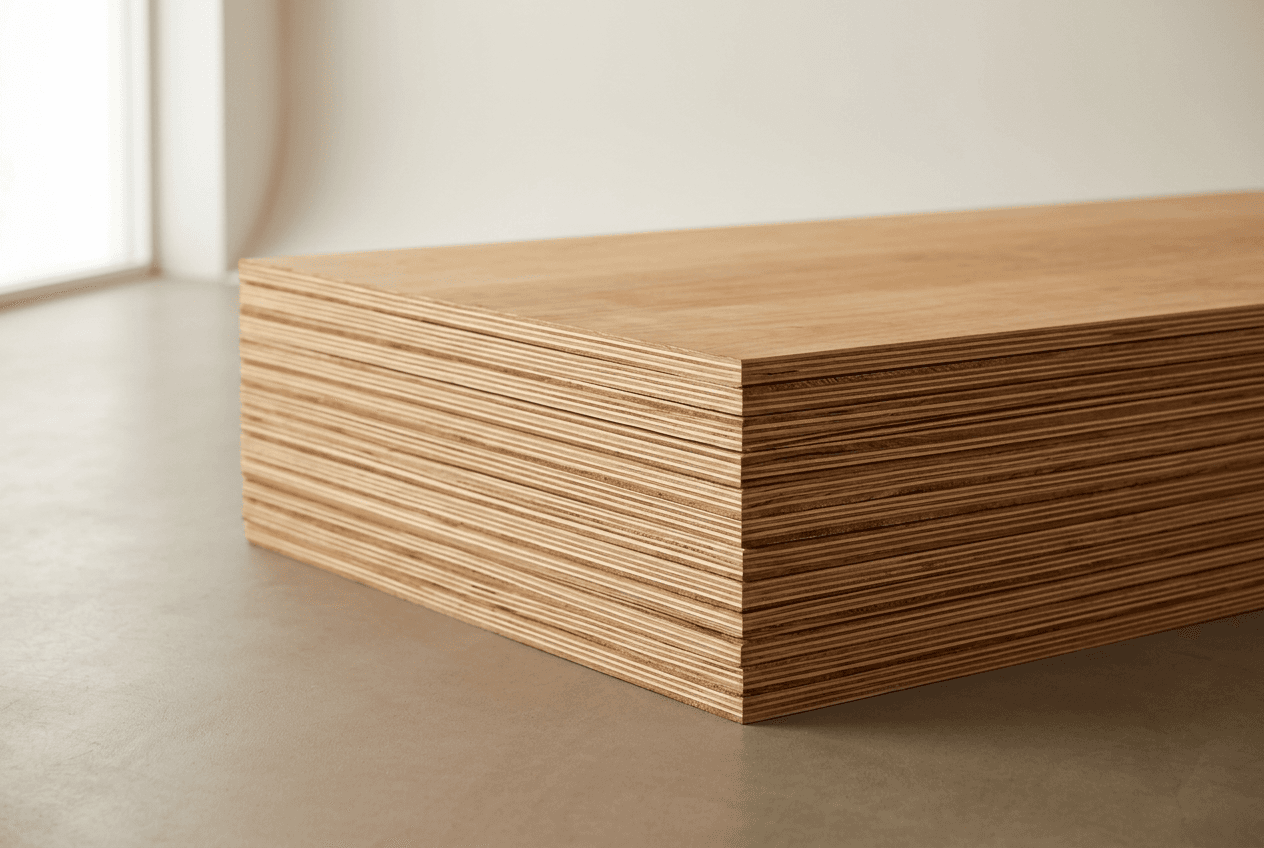
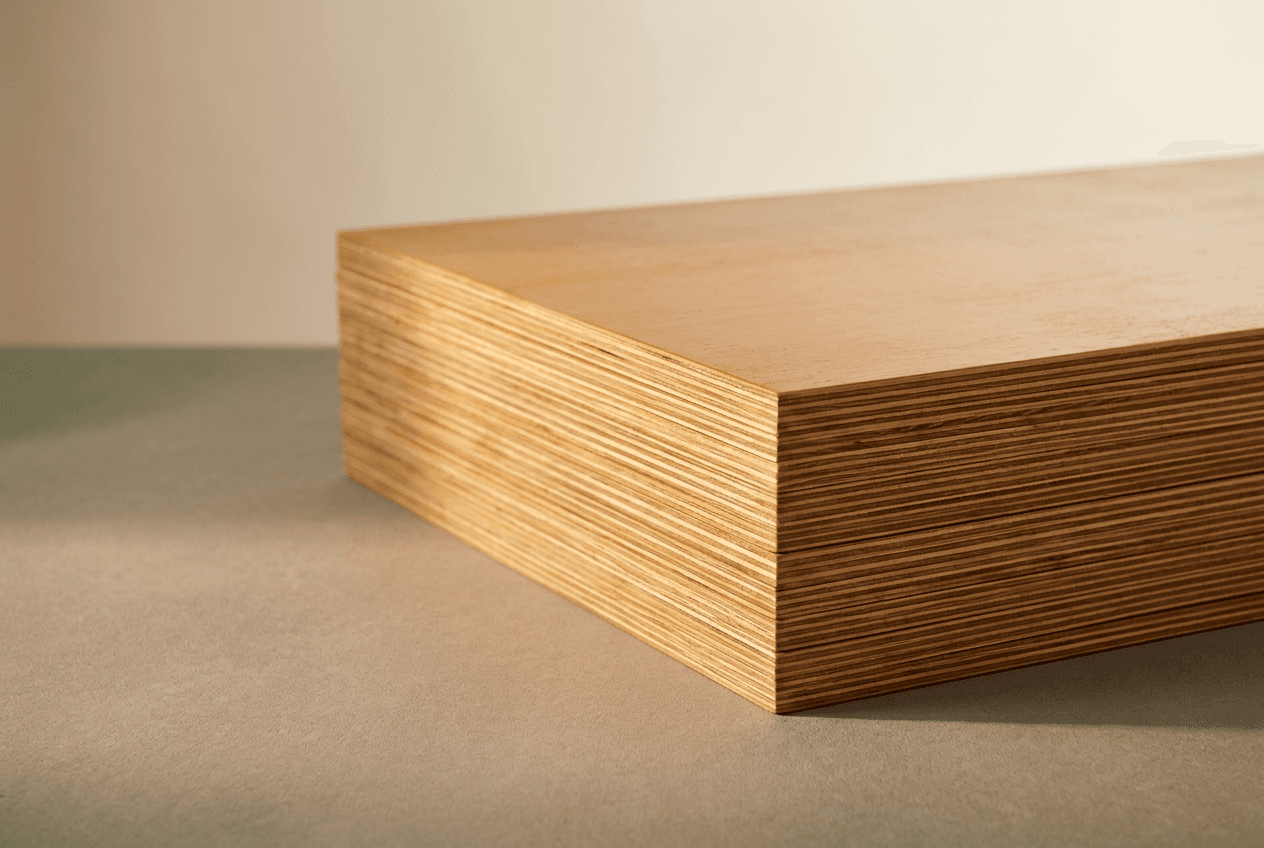
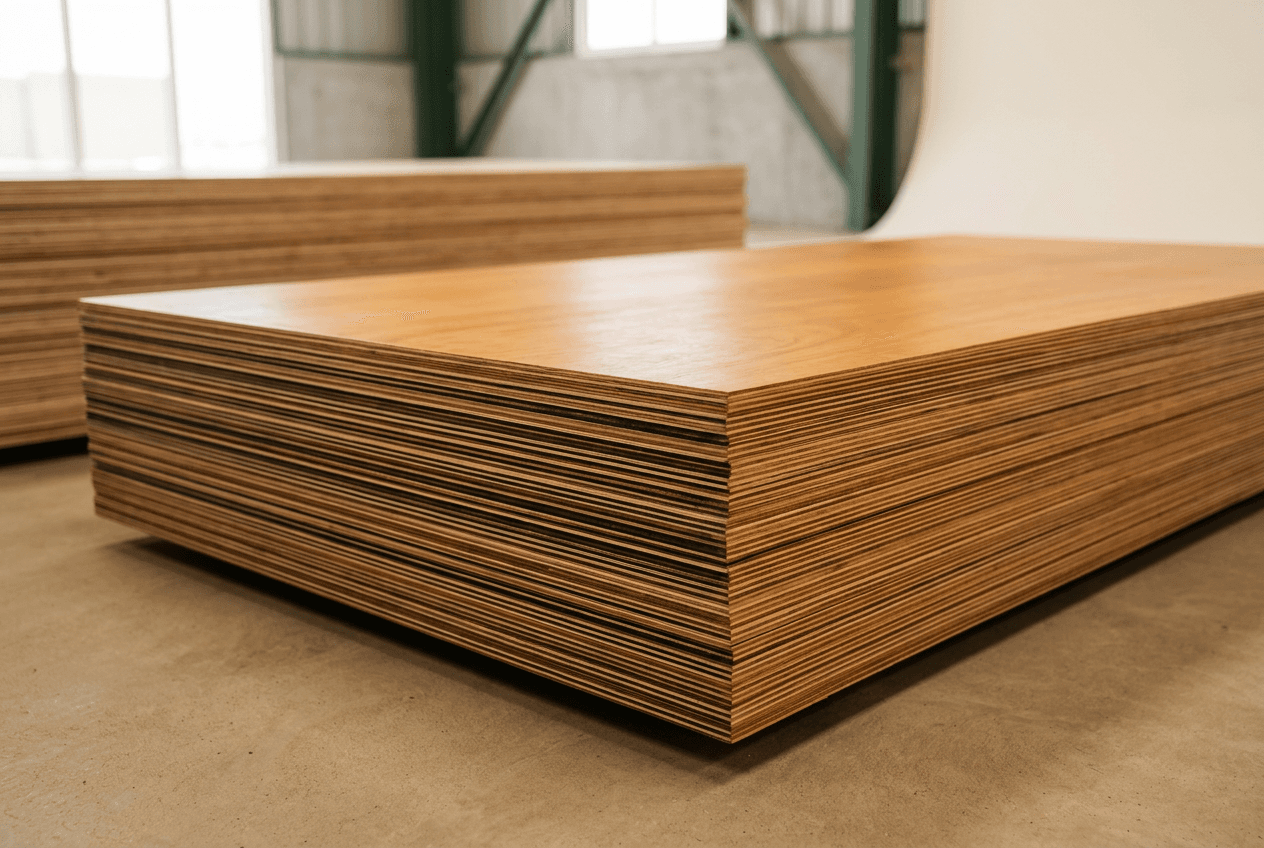
Need a quote on Malaysian plywood for your project?
Send a quantity list with thicknesses, the delivery site, and the sustainability certificate required (PEFC or FSC). We respond with a formal quote within 4 working hours — unit price, total, and certificates included.